

Your factory is not boring. But your factory video probably is.
Most factory videos look the same. Wide drone shot of the building. Walking tour of the production line. A few close-ups of machines running. Some numbers on screen. Certificates. Done. You have seen one, you have seen them all.
That is fine if all you need is proof of existence. But if your goal is to stand out at a trade show with over 43,000 attendees, win new distribution partners, or drive three months of sales pipeline from a single piece of content, a factory tour is not going to get you there.
We recently produced a factory video for HCI, a cabinetry manufacturer with facilities in Binh Duong and Dong Nai, outside Ho Chi Minh City. HCI had been attending KBIS, the premier kitchen and bath trade show in the United States, for more than five years. In February 2026, they rented every screen at the entrance of the Orlando convention center and played the video we made for them. Attendees stopped. Some watched it multiple times. Their booth was overwhelmed with clients, and the three months that followed were their strongest sales period in years. New partners and distributors approached them because the video changed how people perceived their brand.
- Ehrin made videos for my company that turned out absolutely amazing! He is extremely talented and his team was too notch! Very professional and experienced. We used the videos for a large national show and will be displaying them on our … More website and social media. We received tons of compliments. He mixes art with music and engagement in a way that’s unique and intriguing! Highly recommend him for your next project!

That result did not happen because of expensive cameras. It happened because of what was planned before anyone touched a camera.
Here is what we have learned about factory video production in Vietnam after 20 years of doing it for brands like GE, Siemens, Buhler, ABB and countless other factories all over the world.
Before You Film: The Creative Work That Most Companies Skip
In This Article
HCI found us after seeing a factory video we produced for Tribeca Cabinetry. They knew they needed something that would separate them from competitors in a saturated market. What they did not know was how.
This is the most common starting point. A marketing director or factory leadership knows they need a video. They may have a budget. They may have a deadline. But they do not have a creative strategy. And this is where most factory video projects go wrong before they even begin.
A production company that starts by asking “what locations do you want to film?” is already solving the wrong problem. The first question should be: what do you need this video to accomplish?
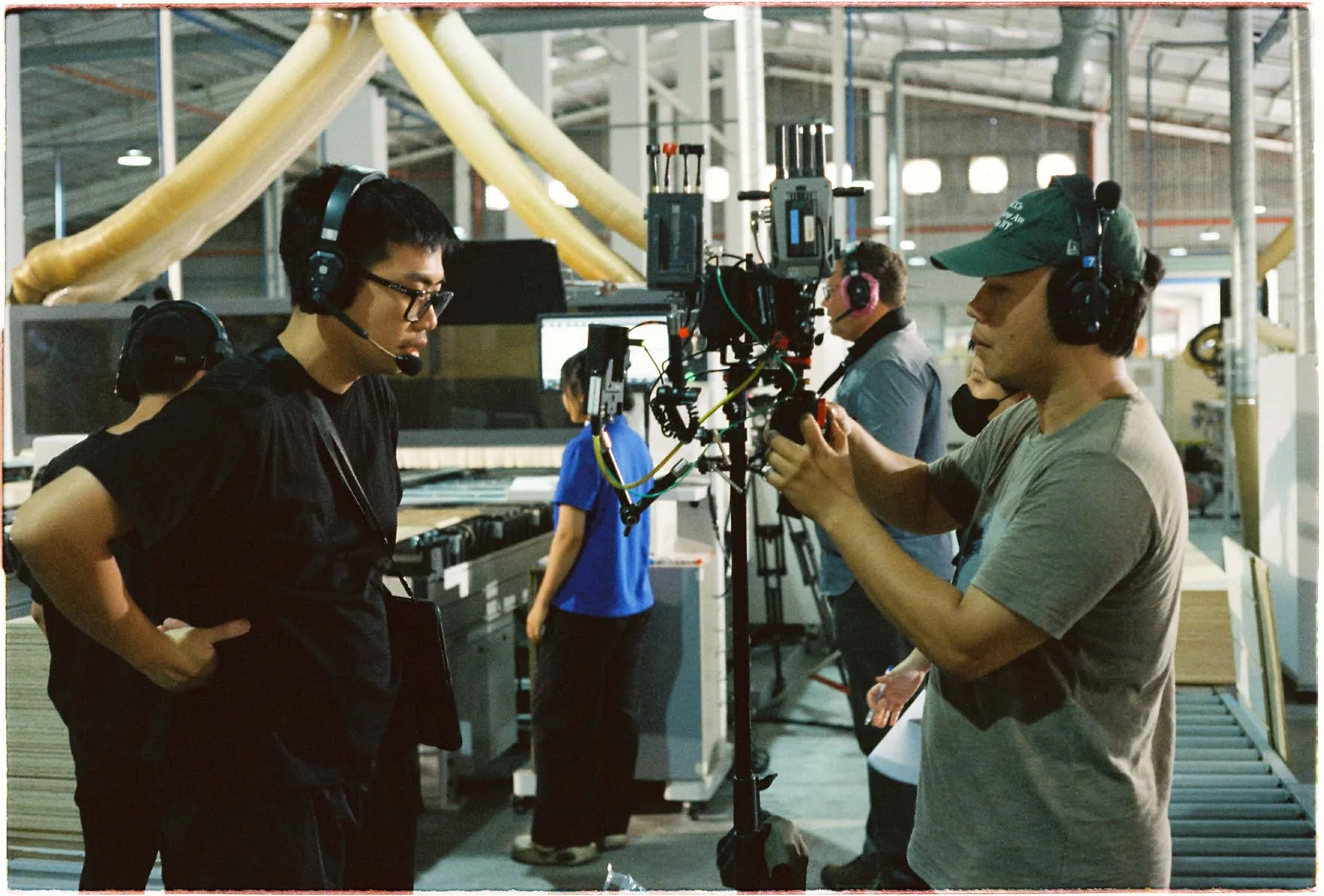
With HCI, we ran a series of meetings, each about an hour, where we worked through their brand values, what their customers care about, what sets their manufacturing process apart, and what specific business outcome the video needed to drive. Only after we understood all of that did we start thinking about visuals.
We then presented an animated creative proposal that showed HCI exactly what the video would look and feel like, including the cinematography style. They could see the concept before we ever set foot in the factory. That clarity is what makes clients comfortable investing in a creative approach instead of defaulting to the safe, generic factory tour.
Getting Access to the Production Floor
Factory leadership is protective of their production floor. It is their livelihood. They do not want a film crew slowing things down, creating safety hazards, or getting in the way of operations.
The way you solve this is preparation, not persuasion.
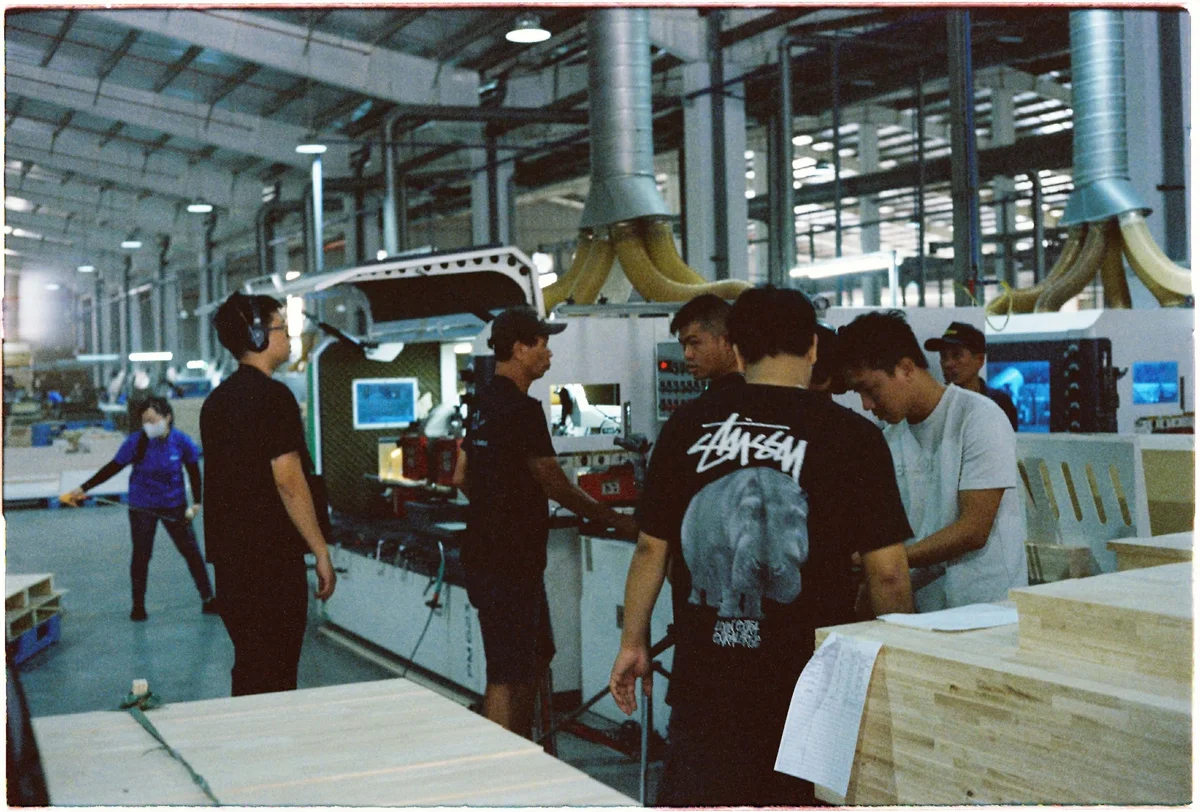
After the creative concept is locked, we do a site visit. We walk every area of the factory and take detailed photographs. We then build a report for the client that maps specific factory locations to specific moments in the creative concept. The factory team sees exactly where we will be, when we will be there, and what we need from them.
For HCI, this meant coordinating across two separate factory facilities in Binh Duong and Dong Nai. We worked with factory staff to prepare specific equipment for the shoot. Sometimes that means asking them to open a machine door or a window so we can film the internal process, because that is where the real story lives. Not the outside of the machine. The inside. What is actually happening to the materials as they move through production.
Our production schedule is detailed enough that we regularly land within 15 to 30 minutes of our planned timing across a full shoot day. After 20 years, we know how long it takes to light a setup, shoot it, and move to the next one. That predictability is what makes factory managers comfortable. They know we will be where we said we would be, doing what we said we would do, and finished when we said we would finish.
Safety Protocols on a Factory Floor
Every factory shoot starts with a safety briefing. We train with the factory’s safety officer before any equipment comes out of a case. Our crew carries safety shoes, hard hats, and reflective vests. Not every factory requires all of them, but we come prepared for the strictest protocols.
The rule is simple: we do not ask the factory to stop anything, we do not put anyone in harm’s way, and we follow the safety officer’s guidance without exception. A professional production company should never be the reason an active production line has a problem.
Why the Crew Matters More Than the Camera
This is where factory video production gets misunderstood.
A production crew can have eight people on set and still produce flat, uninspired footage. Crew size does not equal quality. What matters is whether each person on that set carries a specific creative discipline.
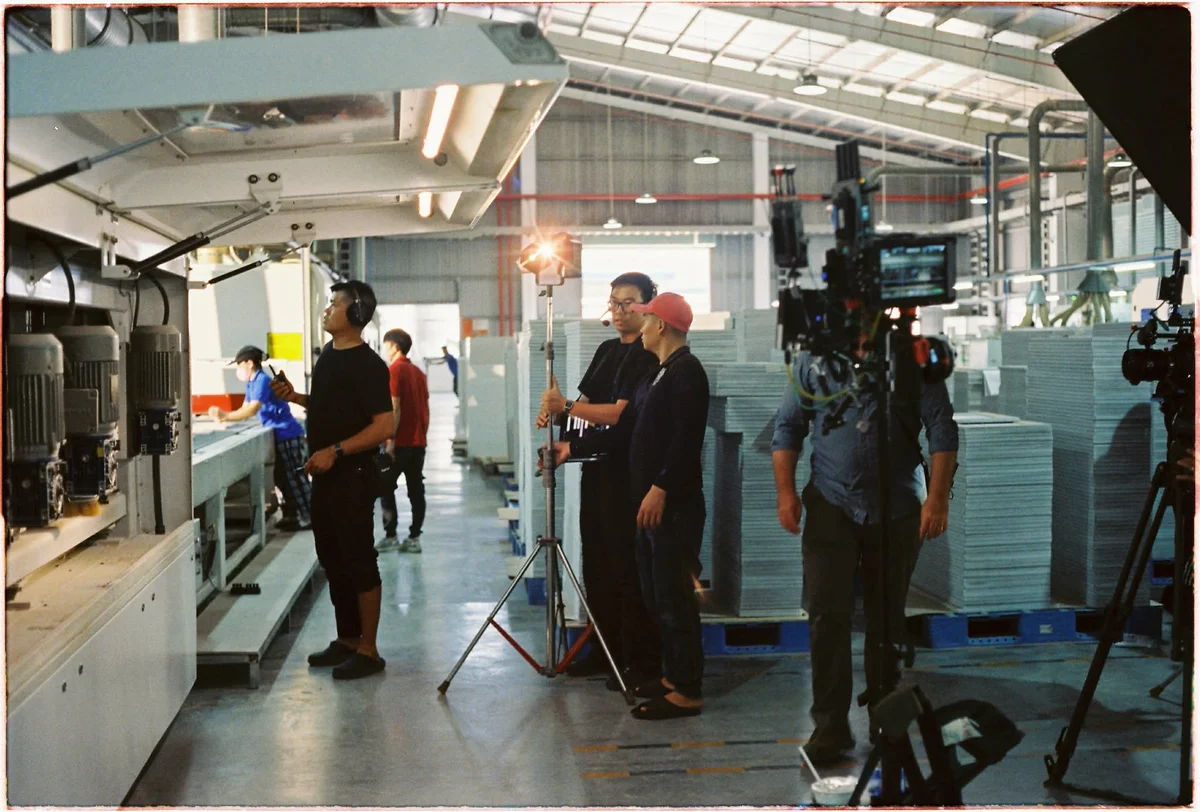
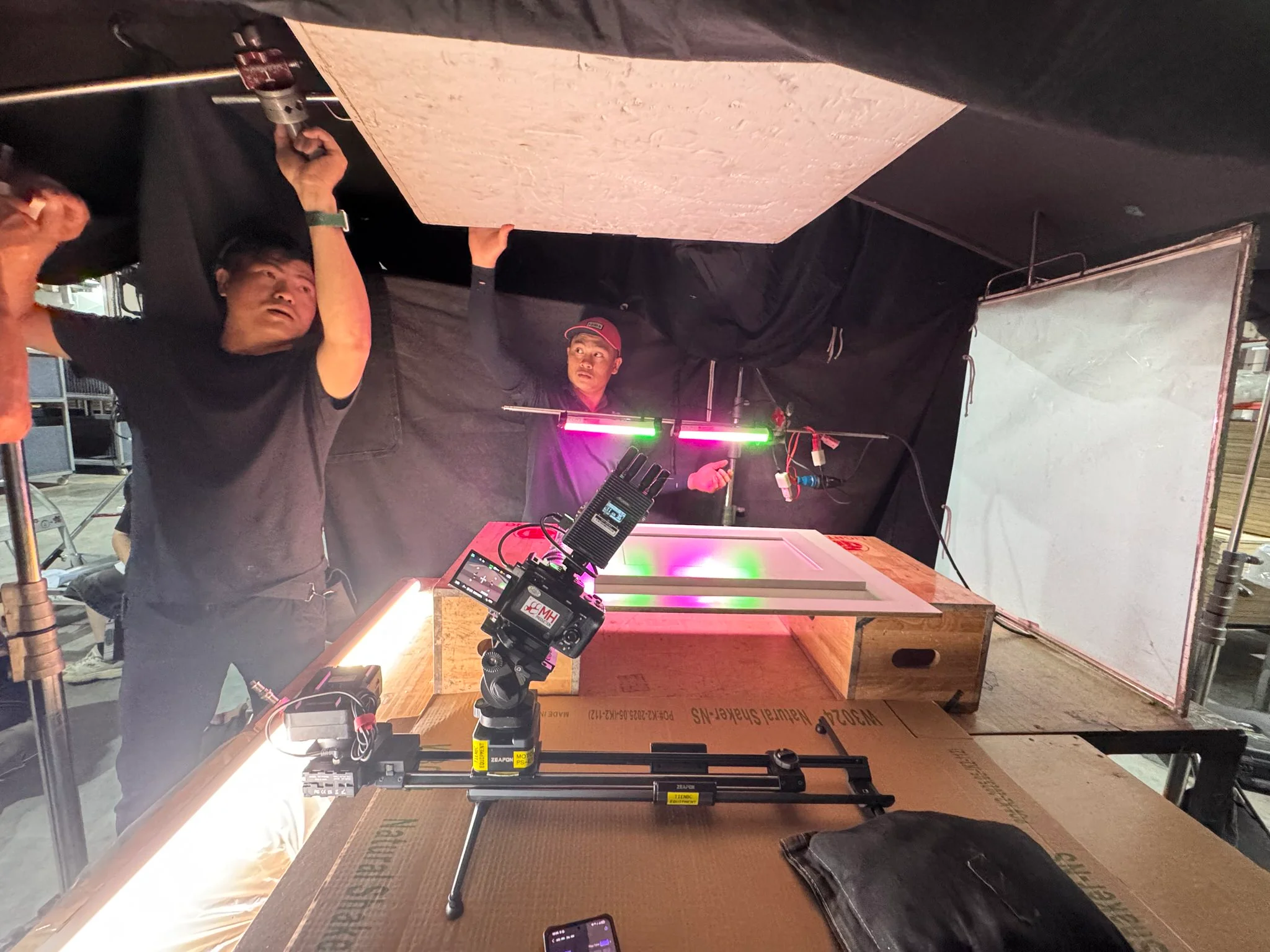
A factory video shot without a dedicated director of photography often has uncontrolled lighting, or worse, a single large light blanketed over an area with no intent behind it. The white balance shifts between setups. The color feels inconsistent. The camera moves, but only on a gimbal with no purposeful composition guiding it. Wide angles of each station, one after another. The edit has no continuity because the footage was never shot with a visual through-line in mind.
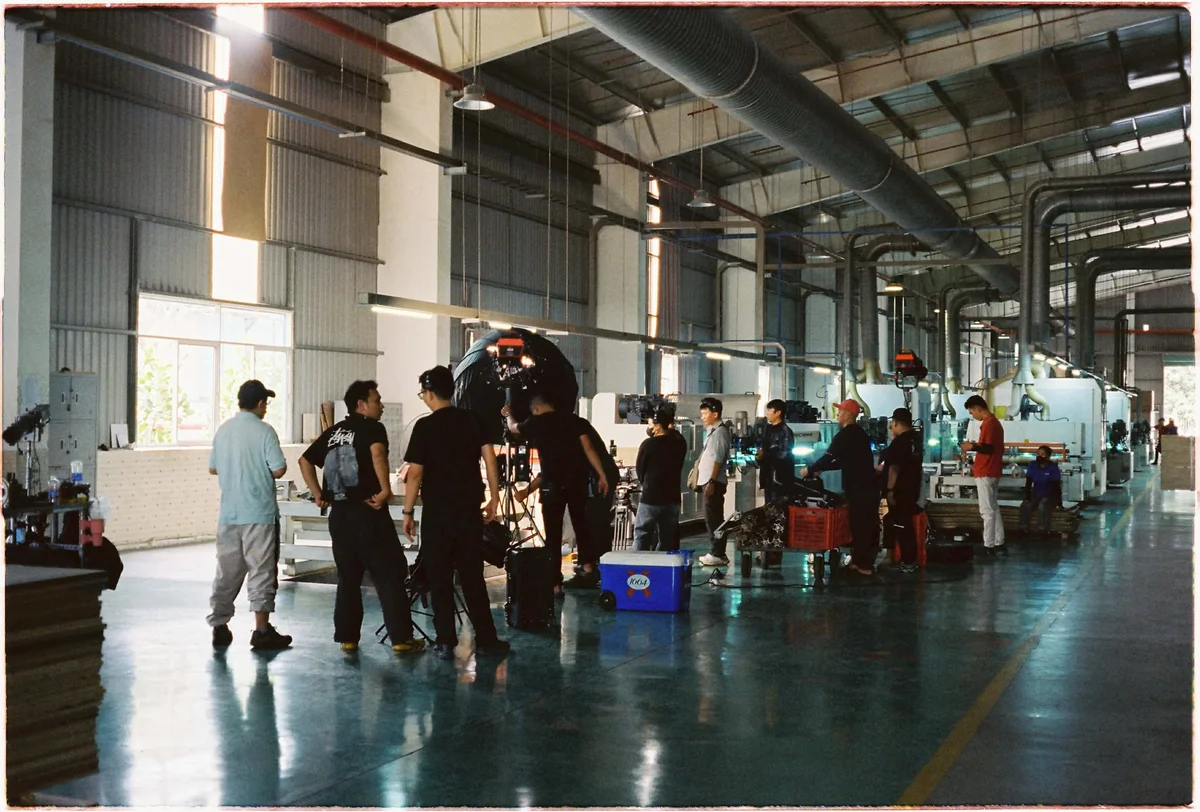
What we bring to a factory shoot is a director, a director of photography, a gaffer, and an assistant camera operator pulling focus. Four people, each with a specific role. The director drives the creative vision. The DOP designs how every frame is lit and composed. The gaffer builds that lighting with precision. The AC keeps the image sharp while the camera moves. It works like an orchestra. Each instrument has a purpose and the result sounds different than a single person playing every part.
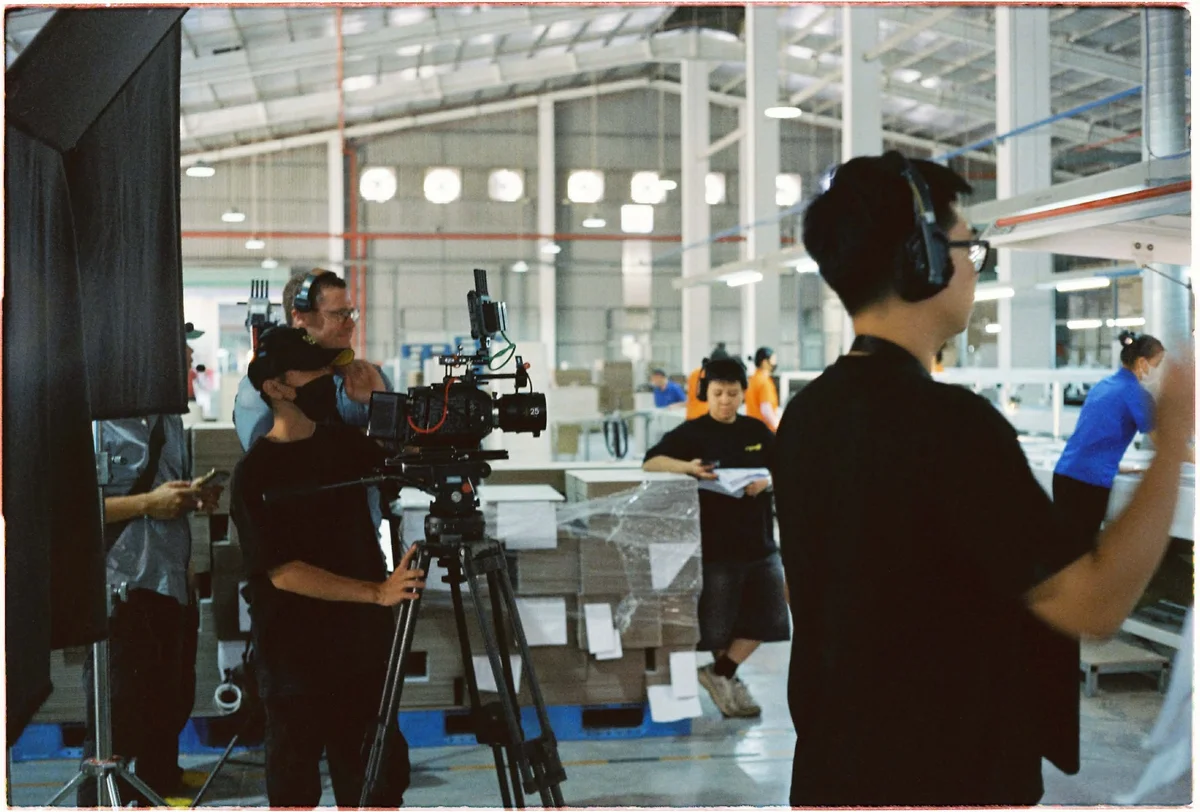
For HCI, we shot across four days. Three days on the factory floors in Binh Duong and Dong Nai, and one day dedicated to drone work using both an FPV drone and a DJI Mavic 4 Pro for aerial perspectives of the facilities.
The difference in the final product is visible in the first five seconds. Properly lit factory footage with intentional composition and controlled camera movement looks fundamentally different from run-and-gun coverage. People notice.
The attendees at KBIS noticed. HCI’s new business partners noticed.
Detail Over Scale: Where the Real Story Lives
Most factory videos default to wide shots. Drone flyovers of the building. Wide angles down the production line. The goal is to show scale. And yes, scale matters. But scale alone does not tell a story.
The detail is where you actually connect with an audience. The raw materials. The precision of a joinery process. The inside of a machine as components come together. A hand inspecting a finished surface. These moments communicate quality, craft, and care in a way that a wide shot of a warehouse never will.
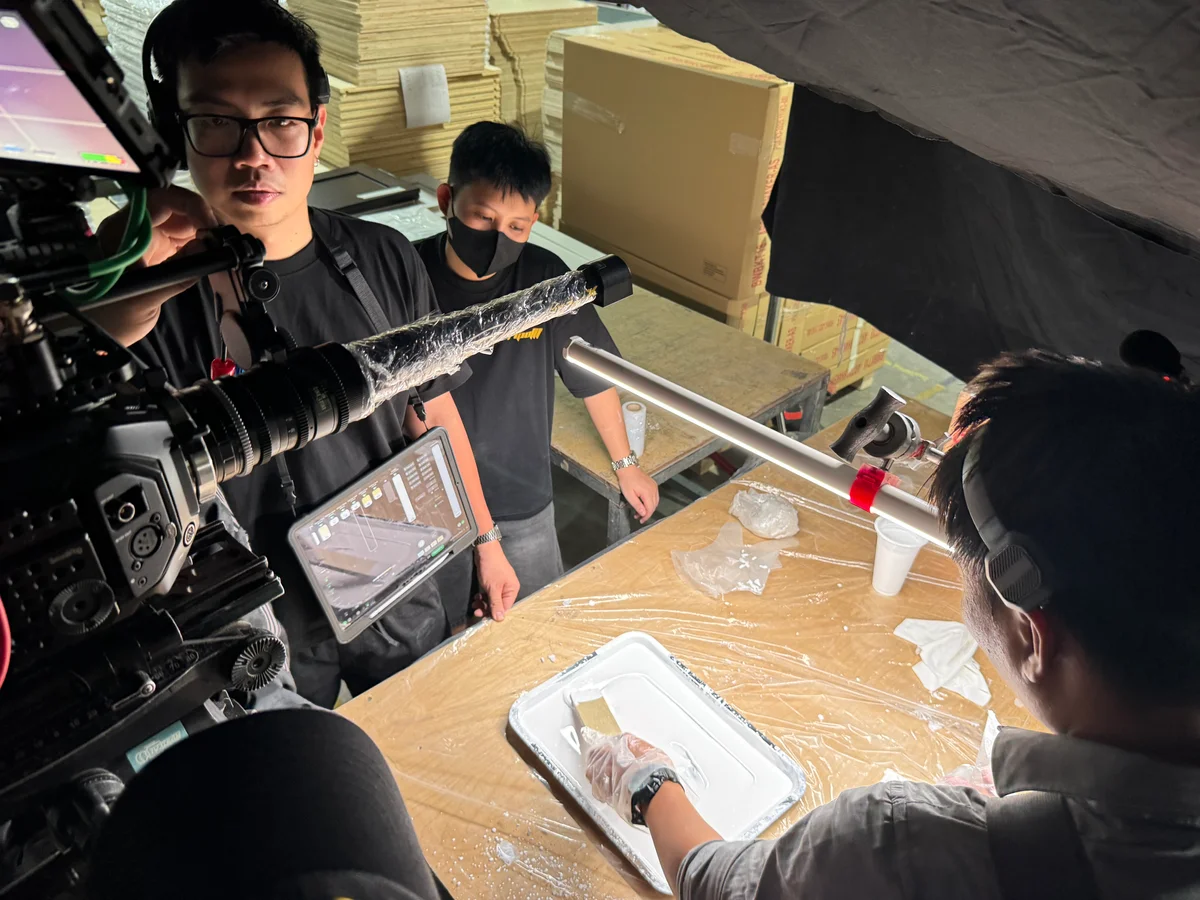
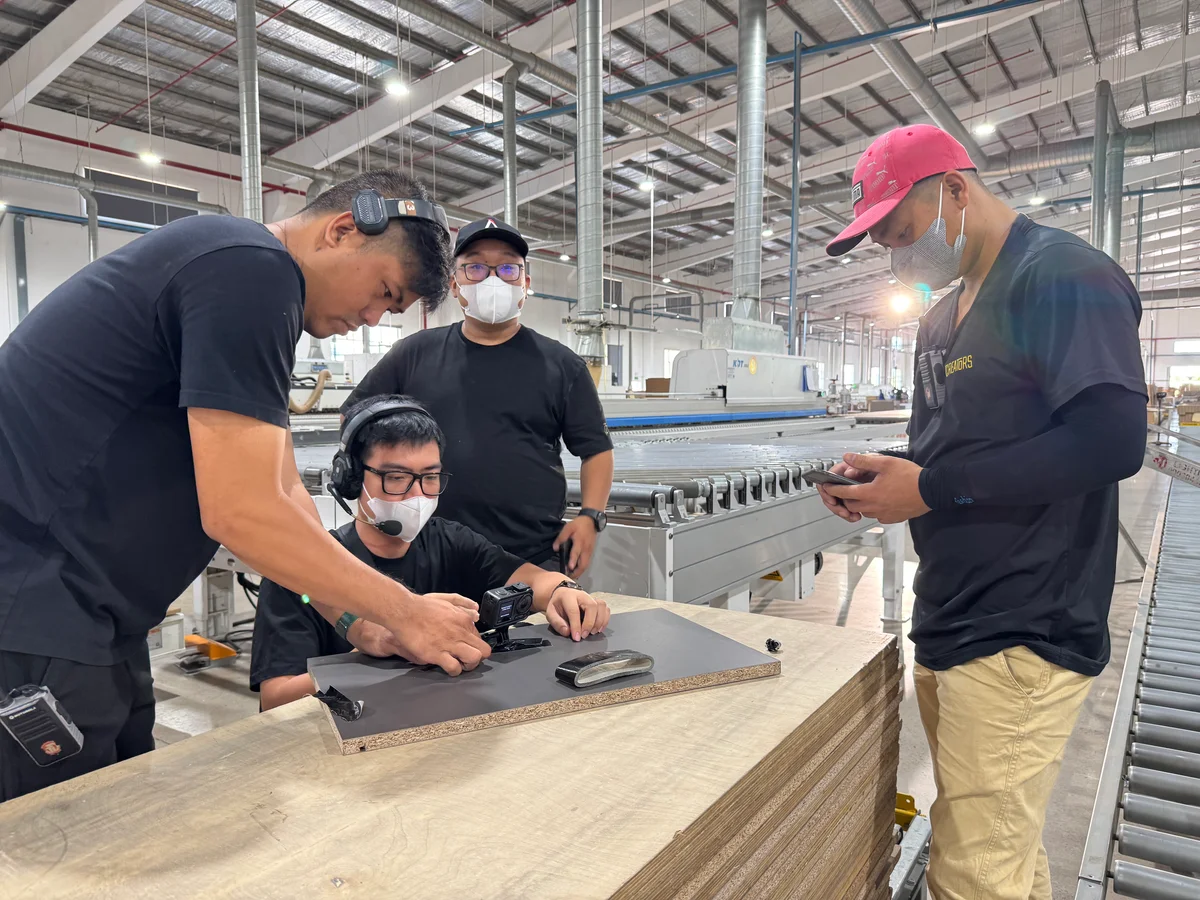
With HCI, we built the entire creative concept around showing the audience something they had never seen before. Not just how big the factory is, but how the product is actually made and why it is different. We shot inside machines. We got close to processes that most factory videos skip entirely because the production company did not plan for it or did not think to ask.
That level of detail is what made attendees at a 43,000-person trade show stop and watch. Not once, but multiple times. It is what made strangers walk up to HCI’s booth and say the video was amazing. And it is what opened doors to partnerships and distribution opportunities that a standard factory tour would never have generated.
Watch the finished HCI factory video here
Factory Video Production Checklist
Pre-Production
- Define the business objective. What should this video accomplish? Sales? Recruitment? Investor confidence? Distribution partnerships?
- Identify your differentiators. What makes your factory, process, or product different from competitors?
- Work with your production company on a creative concept before discussing shot lists
- Schedule a site visit so the production team can map locations to the creative concept
- Coordinate with factory management on access, timing, and any equipment preparation
- Complete safety briefing and confirm PPE requirements for the crew
- Secure drone permits if aerial footage is part of the plan
- Build a production schedule that works around active operations
Production Days
- Confirm crew roles: director, DOP, gaffer, AC at minimum for cinematic results
- Follow the safety officer’s protocols without exception
- Work the schedule. Arrive on time, finish on time, stay out of the way of operations.
- Prioritize detail shots alongside wide coverage. Both matter.
- Capture process footage that competitors do not show
Post-Production
- Review the first cut against the original business objective, not just visual preferences
- Route the cut through all stakeholders who need to approve (sales, management, leadership)
- Plan where and how the video will be used: website, trade shows, sales presentations, social media
- Deliver in formats optimized for each platform
Vietnam Factory Video Production FAQ
How long does it take to produce a factory video in Vietnam?
From first meeting to final delivery, most factory video projects take one to two months. The creative development and pre-production phase usually runs one to three weeks depending on the complexity of the concept and how many rounds of creative review are needed. Production itself is typically two to four days depending on the number of factory locations. Post-production runs one to three weeks including editing, color grading, sound design, and revisions. Some projects move faster, some take longer. Contact us to discuss your specific timeline.
Can you film in an active factory without stopping production?
Yes. We plan every shoot specifically to avoid disrupting factory operations. Our production schedule is coordinated with factory management in advance, and we work around active production lines rather than asking them to stop. We have produced factory videos at facilities across Vietnam, including in Binh Duong, Dong Nai, Ho Chi Minh City, Hanoi, and Da Nang, all while operations continued normally.
Do I need a permit to film inside a factory in Vietnam?
It depends on the specifics. Filming inside a private factory does not always require a government film permit, but drone use does require separate authorization regardless of whether it is indoors or outdoors. Equipment imports for international crews may also require customs documentation. The permit requirements change depending on your locations, equipment, and the type of content you are producing. Contact us to discuss the permit situation for your project.
What does factory video production cost in Vietnam?
Every project is different. The cost depends on the creative complexity, the number of shoot days, the number of factory locations, crew size, equipment requirements, and the scope of post-production. A single-location process video with basic editing is a fundamentally different budget from a multi-location cinematic brand film with animation and sound design. Vietnam offers strong value compared to production costs in the US, Europe, or Singapore, but the right question is not “what is the cheapest option?” It is “what level of production will actually achieve my business objective?” Contact us to talk through your project and we will provide a detailed quote.
Can you produce factory videos at multiple locations in Vietnam?
Yes. We regularly produce across multiple cities and factory locations within a single project. For HCI, we filmed at two separate factory facilities in Binh Duong and Dong Nai over three days, plus one additional day for drone coverage. We have factory video experience across Ho Chi Minh City, Hanoi, Da Nang, and other industrial zones in Vietnam. Multi-location shoots require additional planning but we handle all the logistics, scheduling, and crew coordination.
What should I prepare before a factory video shoot?
The most important thing you can do is clarify what the video needs to accomplish for your business before you talk to any production company. Beyond that, identify a point of contact at the factory who can coordinate access and scheduling, think about which areas of your process best represent what makes you different, and be ready to discuss your brand values and target audience with the creative team. A good production company will guide you through everything else.
9 Comments